This is to suggest, now that the Winter Olympic Games are upon us, that these quadrennial versions of international sleigh rides and snowball fights could stand to promote more diversity, equity and inclusion. As varied as they are—featuring men and women from 92 national delegations skiing, skating, bobsledding, curling, snowboarding, biathloning across Northern Italy during the current edition—the Winter Games pretty much remain the “white man’s (and women’s) Olympics.”
Think of the not-so-wealthy countries populated by people of color. In Modern Olympic history, Cuba has won all of its 244 medals at the Summer Games. None in the Winter. Brazil (170 medals), Kenya (124), Jamaica (94), Argentina (80) have the same imbalance, with no Winter Olympic hardware.
Jamaica’s bobsled team at the 1988 Calgary Winter Olympics was an unlikely sensation, of course, inspiration for the 1993 film “Cool Runnings” and that tropical land’s first of regular Winter Games appearances. But from the original 30th-place finish in the two-man event, Jamaica’s best showing since has been no higher than 14th.
A major factor is geography, of course, and related meteorology. Live in the Alps or other snowy climes and the odds of developing one’s luge or ski-jumping skills are greatly enhanced. It’s hardly a surprise, then, that less than half the globe’s countries show up at the Winter Games, and that, according to nbcolympics.com, there were only five African nations—Eritrea, Ghana, Madagascar, Morocco and Nigeria, fielding a total of six athletes—at the 2022 Beijing Winter Games. A record low. That was down from eight African countries at the 2018 Pyeongchang Olympics in South Korea.
But, wait. There is a solution to this inequity, a way of promoting marginalized countries and peoples to reach wintry Olympic heights: Move some sports from the Summer Olympic program to the Winter Games. And logically.
Basketball, for instance, is mostly contested in winter since it was created in December 1891 as a means to keep Canadian-born instructor James Naismith’s students at the Springfield, Mass., YMCA Training School fit during long New England winters. And, P.S.: When basketball made its Olympic debut at the 1936 Berlin Summer Games—outdoors—it didn’t make much sense. Especially when a pouring rain descended on the gold medal final in which the United States slogged through a 19-8 victory over Canada on a water-logged clay tennis court.
Olympic boxing certainly can happen in the wintertime. And volleyball. Wrestling. Weightlifting. Based on past results, moving those sports to the Winter Games surely would bring the first non-Summer medals to Venezuela, Cuba, Mexico, Puerto Rice, Bahamas, Chile, Dominican Republic, Indonesia and others.
It is a fact that the Olympic Charter specifies that Winter Olympic sports are to be contested on snow or ice. But need that be settled law? Especially at a time when global warming has made snow and ice harder to come by. Studies indicate that man-made snow, which has become common (and necessary) in recent Olympic cycles, exacerbates climate change, and further research warns that, without artificial snow, only four cities in the world would be capable of hosting the Winter Games by 2050.
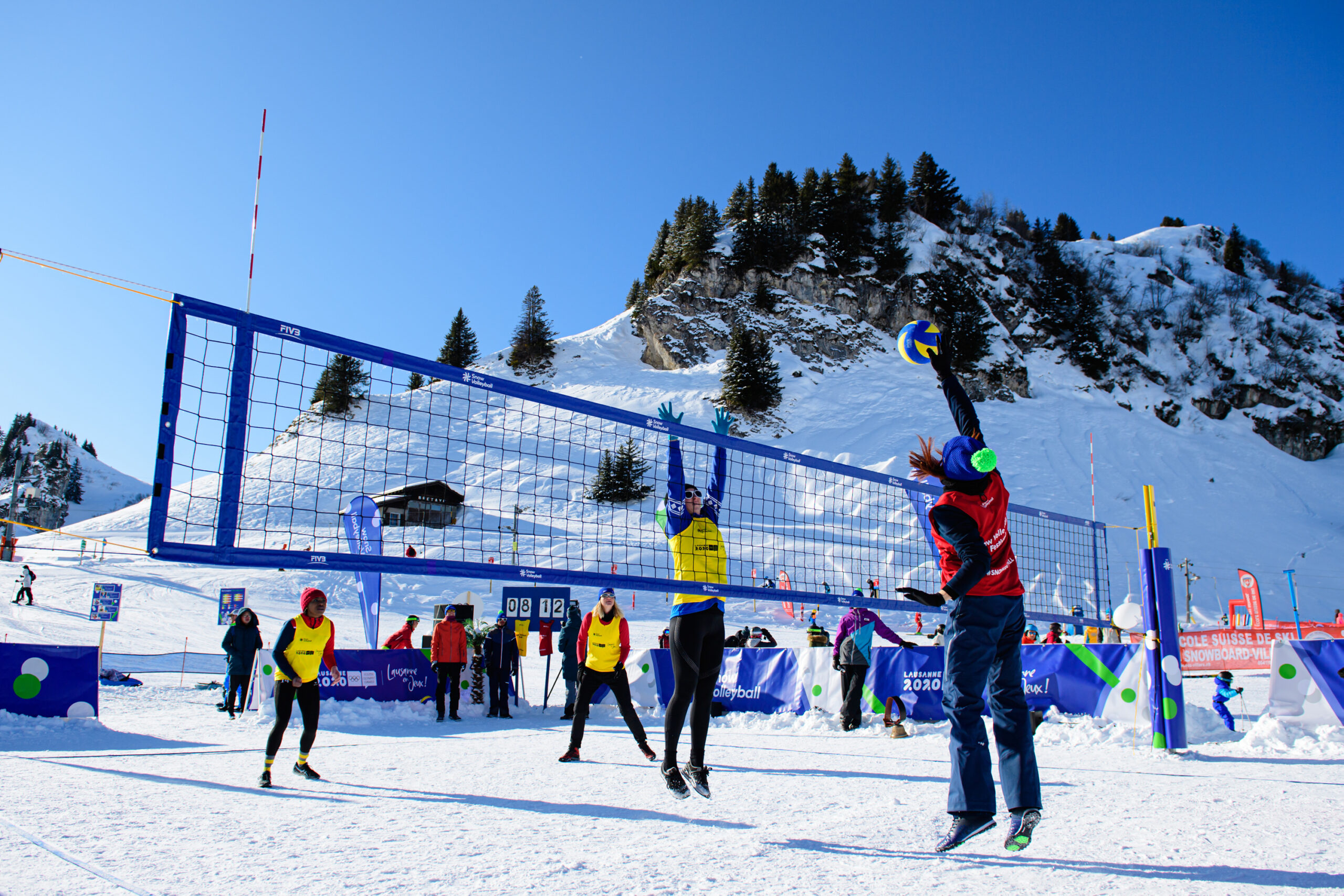
So, as the Winter Olympics continue to literally melt away, this isn’t a call for, say, boxing on ice—oh, that’s called hockey—though that might be interesting. This isn’t backing how some Olympic poohbahs have envisioned adding “snow volleyball” (quite a reverse from some chauvinist IOC member recommendations, upon the appearance of beach volleyball in the 1996 Summer Games, that it would get more attention if women should wear skimpier outfits).
Just last June, newly elected IOC president Kirsty Coventry organized a working group focused on possibly altering Winter/Summer Olympic lineups. Not exactly a push for rebranding the operation into Indoor Olympics and Outdoor Olympics, but Coventry herself is the personification of how assumptions can sometimes be misleading. A former swimming champion from Zimbabwe, Coventry’s seven medals make her Africa’s most decorated Olympian. She is white.
Anyway, Coventry’s task force has been assigned with “identifying ways for sports to be added to or removed from the program through a clear and transparent process. It will also consider the suggestion that traditional Summer or Winter sports could cross over.” Two sports that are pushing for admission into the Winter Games are cross-country running and cyclocross—neither contested on snow or ice—but clearly meant to add diversity to the Winter event. Sebastian Coe, the former Olympic middle-distance running champion who is president of track and field’s international federation, has said as much, citing cross-country in the Winter program as a way to put African athletes in position for Winter medals.
Let the Games diversify.