What’s not to like about an international sports festival where an Argentine native who lives in Spain, working as coach of the United States national soccer team, gleefully joins his players and the celebrating spectators in post-match sing-alongs of a half-century old tune that celebrates rural America?
That coach, Mauricio Roberto Pochettino Trossero, wasn’t brought into this world until 1972, a year after “Take Me Home Country Roads” hit the U.S. charts. He hails from the South American town of Murphy, named for an 1800s Irish immigrant who became a wealthy Argentine landowner. And Murphy is a long way from Roswell, N.M., where Henry John Deutschendorf Jr.—later known as John Denver—was born and, at the height of his country/folk career, recorded “Country Roads.”
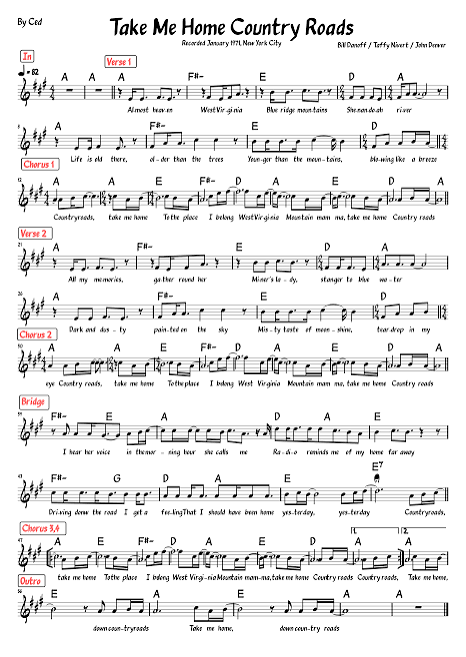
The ditty name-checks West Virginia, but in fact alludes to the comfort of a simpler, peaceful existence; it’s not really about geography as much as an emotional refuge found somewhere in a happy past. Denver’s co-authors, Bill Danoff and his wife Taffy Nivert, were inspired by affections for the rustic, very American byways in Massachusetts, Connecticut and Maryland.
What’s not to enjoy about a real all-over-the-map event? Though technically a victory anthem in this soccer setting, “Country Roads” evokes feelings for one’s beloved home, and that fits right into the World Cup’s melting pot of international visitors and the diaspora of hyphenated Americans giddily demonstrating their affection for cultural ties. And no passport required to participate in the fun.
Beyond just an elite soccer tournament, the World Cup is flags, anthems, chants, languages, geography and glimpses of citizens and life beyond these shores. Scotland’s kilted, bagpiping Tartan Army of fans. Norway’s Viking-mimicking followers pulling imaginary oars. The La Mancha Amarilla—Yellow Stain—of the Colombia fanbase gathering for matches attired in yellow. The Dutch supporters’ dress code of orange. Always orange. There is a constant global awareness, an ethnic and religious pluralism, that Americans really can use right now—maybe more than ever—at a time of rampant institutionalized xenophobia.
What could be a problem with the fact that, of the tournament’s original 48 national teams, 28 are coached by managers from other countries? According to The Athletic, of the World Cup’s 1,248 players, just under a quarter are representing a team other than their country of birth. There was a bad joke, during the 1990 World Cup in Italy, when Ireland was scouring beyond its boundaries for better soccer talent, that anyone with an Irish grandparent or long-lost ancestor—even anyone who owned an Irish setter—was welcome to play for the Ould Sod. In fact, it’s fairly typical for players to have the choice of representing their birth nation or that of their parents.
A prime example is the Americans’ early goal-scoring leader, Folarin Balogun, who was eligible to play for Nigeria (his mother’s home), England (when he was raised) or the United States, where he was born during his mother’s visit to New York. This sort of thing tends to take the jingoism out of national consciousness.
So there is the Denver recording, requested by U.S. Soccer officials when FIFA—soccer’s international governing body, which operates the World Cup—queried teams for their preferred songs to be played on stadium sound systems after victories. Reportedly, Bon Jovi’s “Livin’ on a Prayer” and Neil Diamond’s “Sweet Caroline” were considered along with “Country Roads,” with “Sweet Caroline” eliminated because England preferred that one.
Whatever. “Country Roads” is just the ticket. It references, rather than a narrow, us-against-them patriotism, an identity to home and/or forebears. So members of Ecuadoran communities, Cape Verde communities, Portuguese communities and so on gather to celebrate teams that represent, at some point in personal histories, their people.
Whether your side wins or loses, what makes the World Cup so appealing is the mood of the John Denver song.
Country roads, take me home, to the place I belong….